

Shipping rate calculator
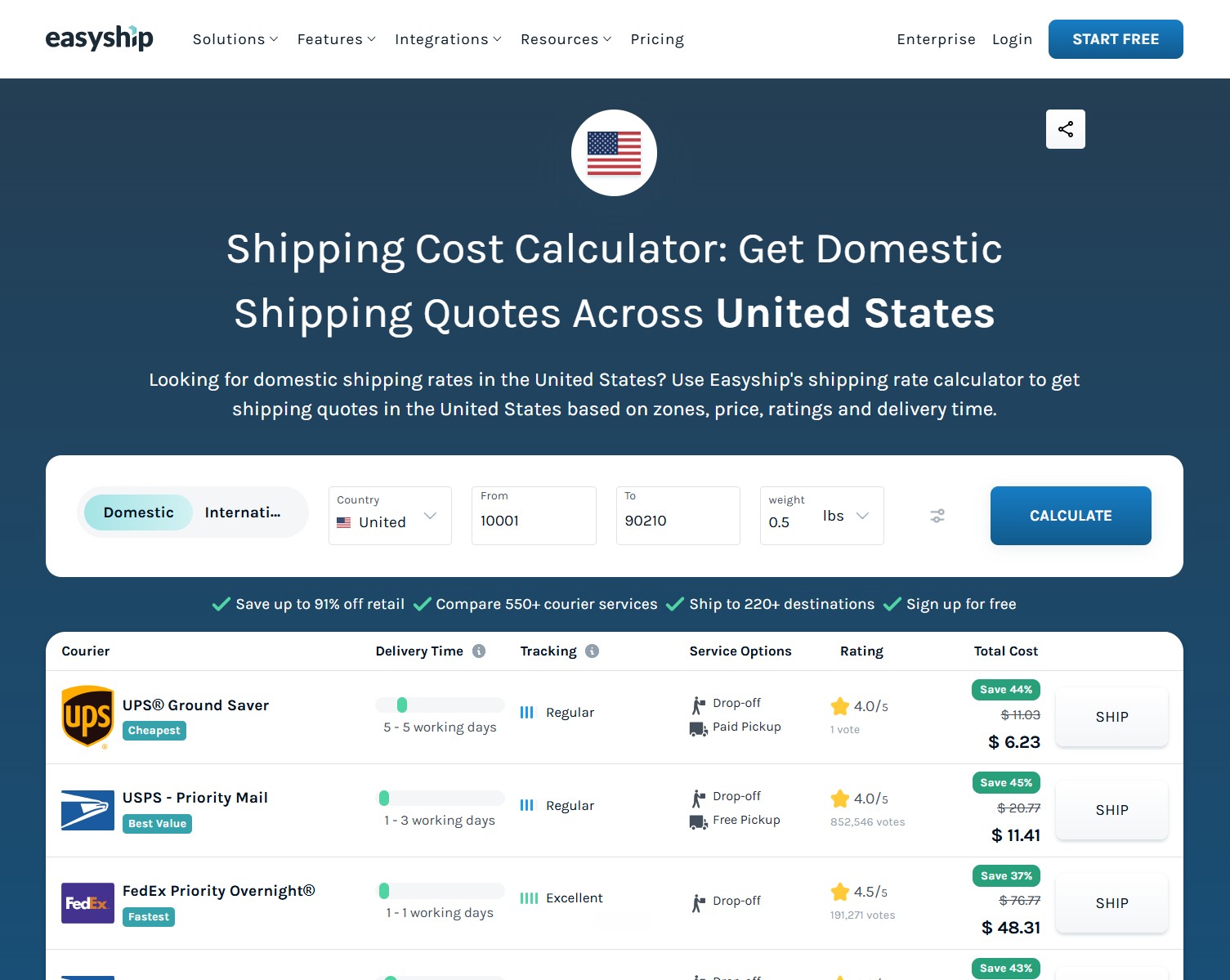
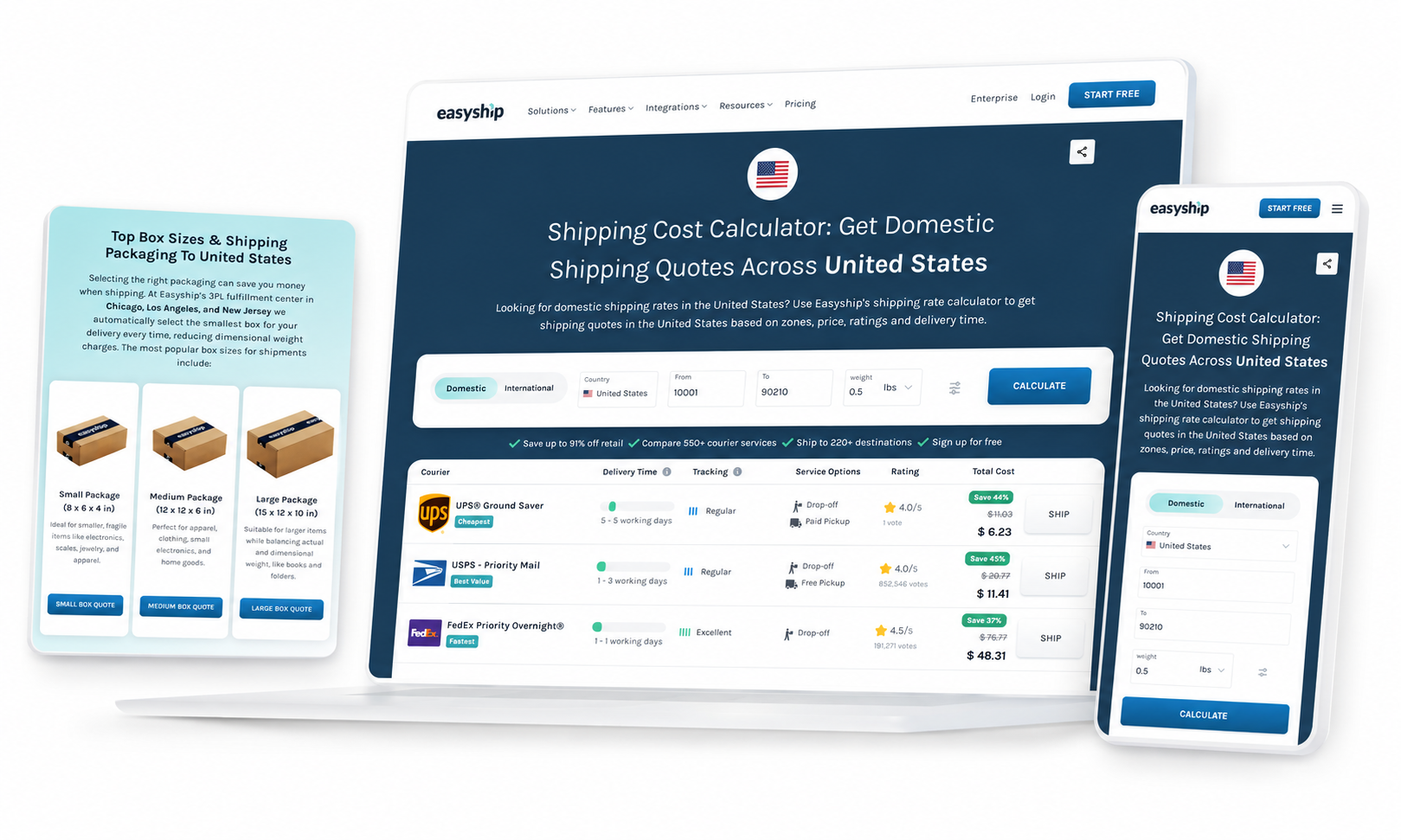
The calculator that compares 550+ couriers by price, speed and rating across 220+ destinations — rebuilt and stabilised on desktop and mobile, wired to Easyship's live rate APIs.

Inside a global logistics company's own Nuxt/Vue codebase — the shipping-rate and tax & duty calculators, server-rendered programmatic courier pages, a MongoDB CMS and the reliability work behind it, on Google Cloud.
Easyship already had an engineering organisation across three continents. What they needed was not a vendor to hand a spec to, but engineers who could work the way their own team does — inside their repositories, through their review and deploy pipeline, on the parts of the product that decide whether a shipper ever signs up. We took ownership of the public site and its CMS: a server-rendered Nuxt/Vue application, a MongoDB content layer, and the calculators and courier pages that pull people in from search. Every change ships as a reviewed pull request into Easyship's own GitHub, promoted develop → staging → production.
A marketing site at this scale is a real application — calculators wired to live rate APIs, thousands of pages rendered for search, and a content layer the team can update without a developer.
The calculator that compares 550+ couriers by price, speed and rating across 220+ destinations — rebuilt and stabilised on desktop and mobile, wired to Easyship's live rate APIs.
Landed-cost estimates for cross-border shipments — the duties-and-taxes API integrated and the country-by-country pages behind it debugged and made reliable.
Thousands of courier, comparison and country pages rendered server-side so Google sees real content, not an empty Vue shell — the traffic engine of the whole site.
A repeatable CSV → MongoDB pipeline so the team refreshes courier data, translations and content themselves — no developer in the loop for a routine update.
SSR rendering, sitemaps, hreflang, canonical URLs and a redirection strategy — the difference between pages that index and pages that quietly 404 or 500.
Production incidents closed — crash loops, 5xx spikes, Redis and Cloudflare issues — and security findings cleared: dependency vulnerabilities, cookie hardening and WAF rules.
Embedded in a global engineering team since 2025 — shipping into the client's own repositories through their review-and-deploy pipeline.
The shipping-rate and tax & duty calculators rebuilt and stabilised across desktop and mobile.
Thousands of programmatic courier and country pages rendered server-side so they index cleanly — 404s that used to 500, sitemaps, hreflang and canonicals all fixed.
A repeatable CSV → MongoDB pipeline so the team refreshes courier data and translations without a developer.
Production incidents closed on a Kubernetes-and-Cloudflare stack — crash loops, 5xx spikes, Redis and CDN issues.
Security findings cleared — dependency vulnerabilities, cookie hardening and WAF rules — on a high-traffic public site.
 Nuxt
Nuxt Node.js
 MongoDB
 Google Cloud
 Cloudflare
 Redis
Redis Clutch★★★★★5.0 / 5.0
Across 18 independently published client reviews
“They have a deeper technical knowledge than any web designer I've met to date.”
Long-term engineering partnerships across software, commerce, mobile and AI.
 01
01 B2B commerce
Next.js storefront, Python ingestion pipelines, DynamoDB data layer and AWS infrastructure.
 02
02 Event technology
Multi-organiser commerce, Stripe instalments and two native apps in one connected platform.
 03
03 Education & training
WordPress and WooCommerce, a Moodle LMS, Stripe deposits and Zoho CRM, tied together with Zapier automation.
 04
04 Medical aesthetics
A lead-to-billing system on GoCardless Direct Debit, provider certification, and a React Native app for machine owners.
 05
05 Luxury commerce
Server-rendered Next.js commerce over a Laravel API, bespoke operations tooling and re-architected AWS infrastructure.
 06
06Discovery briefs, e-signed contracts, Stripe deposits, delivery milestones and time tracking in one operational system.
Book a 30-minute call with the team that will scope and lead your project.